New 750mm line opens!

Wednesday, 22 May 2013 by

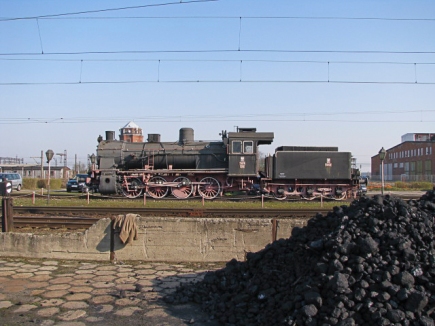
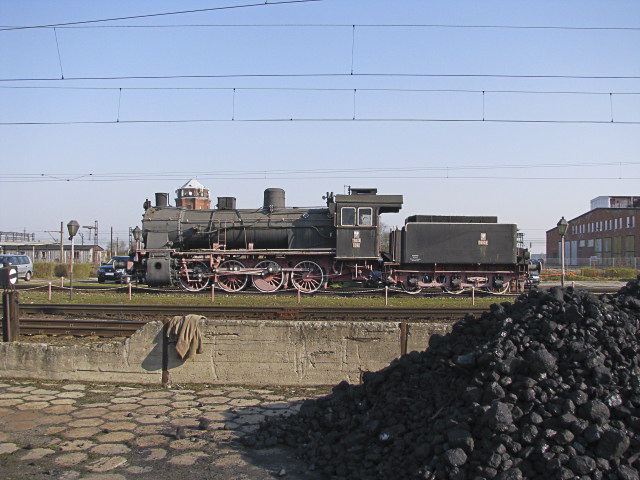
Px48-1907 undergoing trials on the Krosnice N.G. Railway in 2012. Video by Krośnicka Kolej Wąskotorowa.

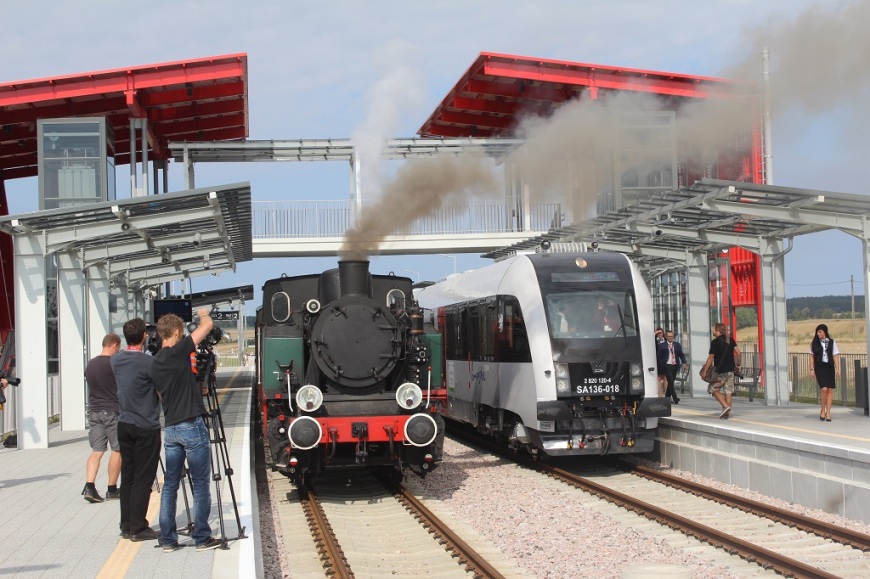
Although purists will grumble that it is not a real narrow gauge railway, the formal opening of the Krosnice  Narrow Gauge Railway, which takes place over the weekend of 25-6 May is a burst of sunlight in an otherwise murky landscape. Px48-1907, which graces the line, has been immaculately restored to a no-expense-spared finish.

Let us hope that Interlock Pila have done as good a job on the boiler and moving parts of the loco as they have done on its external appearance. The engine will perform on new track laid on a brand new trackbed so, hopefully, given the light loads that the engine will now haul, everything will work perfectly for many years to come.

Px48-1907 on the Zulawy Railway in autumn 2010. Video by LukaszWMG

It may seem strange that, while some local authorities with narrow gauge lines would like nothing better than to dispose of them, Krosnice has built itself a brand-new line, albeit only a park railway, and have graced it with a real live Px48. However, given the way the Polish grapevine works, if the Krosnice Railway is successful, it may influence other local authorities to look again at their own lines.

More:
Railway film festival at Krosniewice

Wednesday, 15 May 2013 by

STOP PRESS – TRAINS CANCELLED

mbxd1-204

Krosniewice’s restored MBxd1-204 railcar, built in 1967. Photo Krosniewicka Kolej Waskotorowa.

(Click to see the original photo on Facebook)

The railway film festival to be held in Krosniewice from 24 to 26 May promises trains to Krzewie using restored Polish railcar MBxd1-204, pictured above. These will be the first public trains on the railway for several years. This is the first event following the setting up of the new Krosniewicka Kolej Waskotorowa (Krosniewice narrow gauge railway) Facebook page on 25 April 2013.

krosniewice-25-26-may-timetable

Krosniewice – Krzewie timetable for 25 and 26 May 2013

(Click to see the original on Facebook)

The timetable shows five return trains between Krosniewice and Krzewie, four of them connecting with Koleje Wielkopolskie’s local trains between Poznan and Kutno. The fifth train is an out and back ‘special’ including photo stops. Krzewie Wask is the narrow gauge platform on the south side of Krzewie station, reached by the same subway used to access the standard gauge platforms. Although the film festival is advertised as starting on Friday 24 May, the trains will only run on Saturday 25 and Sunday 26 May.

krosniewice-film-festival

Film Festival poster

(Click to see the original poster on Facebook)

The poster lists the other attractions of the film festival weekend, including the screening of Polish Film Chronicle material made by PKP between 1950 and 1960, the opportunity for visitors to bring and screen their own films, manual draisine rides, and snack and drinks stalls.

It is wonderful to see the return of railway activity at Krosniewice, and especially encouraging to see the list of organisations supporting or sponsoring the event, namely Krosniewice town council, the Lodz marshal’s office, PKP SA, the Lodz Society for the Protection of Monuments, the arts and cultural group NEO, and the Krosniewice narrow gauge railway volunteer group SKKW.

It is now just over 5 years since the regular scheduled railbuses to Wielka Wies, Dabrowice and Ostrowy, and the profitable freight traffic, ceased on 31 March 2008 when the mayor of Krosniewice terminated SKPL’s operating licence.  Since then, there has been little real activity on what was once one of the biggest and most active of PKP’s narrow gauge networks. Instead there has been much political wrangling behind the scenes. Elsewhere, the demand from tourists to travel on Poland’s remaining narrow gauge railways is growing strongly, so fingers crossed that this event will be the start of a new dawn for Krosniewice, and that the railway will continue to receive the support it needs from local politicians.

UPDATE

An update on the Krosniewice Kolej Waskotorowa Facebook page says that the planned Krosniewice-Krzewie trains using MBxd1-204 have had to be cancelled for technical reasons.

The film festival is going ahead, and there will be the possibility of platelayers trolley rides using either a Wmc diesel trolley or a manual trolley within the station area. Film festival attendees wishing to arrive at Krzewie should telephone 696 197 757 or 784 121 830 for replacement road transport. The event organisers sincerely apologise.

More:
PKP overcharged by 26.5 million PLN

Friday, 10 May 2013 by

Chojny-1000888

It seems that ISO certification is not foolproof. Photo BTWT.

Today’s edition of Puls Biznesu breaks the story that PKP SA Chairman, Jakub Karnowski, has ordered the PKP main board to request Poland’s Anti Corruption Bureau (CBA) to investigate the manner in which 27 million PLN worth of contracts for ISO certification were awarded by 10 different PKP companies to Qwantum.

The certification was part of the safety drive ordered by Minister Nowak following the Szczekociny rail crash in March 2012 in which 16 people died and 58 were admitted to hospital. An internal audit revealed that the work should have only cost 550,000 PLN. Qwantum, like the Minister, hails from the Gdansk-Gdynia-Sopot Trójmiasto on the Baltic coast.

Meanwhile, in an apparently unrelated story, Wprost carries the story that opposition politicians are demanding that the Minister appears before the Sejm Infrastructure Committee to explain recent press articles about how he accepted expensive entertainment from Cam Media without making the appropriate declaration. The Minister has also acquired a collection of expensive VIP watches we he claims were only ‘swapped’ with businessmen.

Cam Media is the company that came up with the ‘Feel Like At Home’ campaign for Euro 2012. It has received ‘tens of millions’ PLN worth of government contracts and also has worked on campaigns for the ruling Civic Platform party (PO).

Sources:

Piaseczno Px48 for sale

Wednesday, 8 May 2013 by

Px48-3917

Px48-3917 leaving Piaseczno. Photo Kurier Wąskotorowy.

Piaseczno Narrow Gauge Railway’s iconic metre gauge Px48 has been put up for sale. The loco was acquired for the railway by Piaseczno Railway Society chairman, Jerzy Chmielewski. After Mr Chmielewski passed away their was a legal dispute between the Railway Society and Mr Chmielewski’s estate. The court decided in favour of the latter.

The loco left the railway on 12 December last year on a low loader and is now reportedly stored in a car park at Skarzysko Kamiene!

Px48-3917 started life as Px48-1782, a 750mm built by Warszawskie Zaklady Budowy Urządzen Przemyslowych. It was regauged to 1,000mm gauge at ZNTK Nowy Sacz in 1969 and given a new number, Px48-3903. In 1992 it was rebuilt by Interlok at Pila with the boiler from 750 mm gauge Px49-1791 and renumbered Px48-3917. After arriving at Piaseczno it had an extensive overhaul led by Zbyszek Tucholski and a team of volunteers.

The loco was the mainstay of special trains on the line until August 2010 when it was withdrawn with a failed boiler. Repairs have been estimated as costing 200,000PLN. The loco has been put on sale at the Polish Internet auction site Allegro with a ‘buy now’ price of 250,000PLN.

A hat tip to John Savery for the story.

Does Poland have the last steam-hauled passenger service?

Monday, 6 May 2013 by

lf

Japanese designed 2-8-2 working a steam hauled passenger train in Kujang, South Pyongan province, North Korea. Video by newslabmedia.

It seems that the Wolsztyn steam kettles which are due to be taken off their regular Wolsztyn-Poznan passenger service by 2017 may not be hauling the world’s last regular steam-hauled passenger service running on the national railway network!

Pearl from the past

Sunday, 5 May 2013 by

lf

Jedrzejow Narrow Gauge Railway in 1974. Lodz Film School.

The Jedrzejow Narrow Gauge Railway (nowadays called the Swietokrzyskie Narrow Gauge Railway) still runs through some outstanding scenery, in spite of having lost, over the years, some of its most attractive fragments. Gone are: a series of spectacular zigzags to cross a high ridge near Pincow, a temporary WWII-era timber bridge across the Vistula near Tarnobrzeg and a more permanent girder bridge across the same river at Szczucin. The latter (which still survives minus the railway) appears in the film.

At its height before WWII, the network comprised many hundreds of kilometres of 600 mm track – both public lines administered by PKP, and freight only lines for carrying sugar beet to sugar refineries. Today, thanks to the efforts of a supporters’ club, the Stowarzyszenia Sympatyków Zabytkowej Jędrzejowskiej Kolejki Dojazdowej, some 31 km of the line have been preserved and are run by an operating company owned by the local authorities.

Like many ‘non-standard’ narrow gauge lines the Jedrzejow system was converted to the Russian ‘standard’ narrow gauge of 750 mm shortly after the end of WWII. When this wonderful video was made by students of the Lodz Film School, the line was past its prime, but was still carrying passengers and freight over a substantial portion of its network.

A hat tip to Piotr Kumelowski for the link.

More (in Polish):

Łódź bridge heave

Wednesday, 1 May 2013 by

The site of the new bridge on April 18 2013. Video BTWT.

Lodz is investing heavily in new roads in anticipation of many more motor vehicles coming into town when the new A1 motorway is completed.

If the same pattern is repeated in Lodz as has happened elsewhere the new roads will persuade even more people to abandon public transport and take to their cars adding yet another twist to the spiral: new roads –> more cars –> more road congestion and air pollution.

mapa_gorna

The Gorna area of Lodz. Map OpenStreetMap.

(Click on map to see a larger area of Lodz to a larger scale.)

One of the roads being built is the missing piece of the southern end of Lodz’s inner by-pass, between al. Jana Pawła II and ul. Szeroka, straightening out a kink at the point where the (1) trunk road reaches the city’s road grid.

This communist-era project was postponed for many years because of the cost of constructing a long railway viaduct so that the new road could dive under the railway line at an acute angle.

Wiadukt-1264

Approaching the new bridge on 26 April. Photo BTWT.

While several new roads at the southern end of the city will tempt motorists and HGV drivers to take the al. Wlokniarzy inner by-pass, the road building budget did not stretch to putting in corresponding improvements at the northern end of the city where the inner by-pass stops near Helenowek, a heavily built up area. Residents here already suffer from appalling congestion all along the (1) road to Zgierz.

Sadly the ‘Lodz Regional Tramway’, which was supposed to run all the way to Zgierz and could have helpd to cut motor traffic, stops at Helenowek as well.

Wiadukt-1266

Next to the bridge, the temporary bases are being demolished.

The biggest civil engineering work on the new road was the construction of a 141 m long steel viaduct to take the existing railway line across the new road. During the last eight months trains crept past the construction site while the abutments for the new bridge were constructed under the operational railway track. In addition temporary concrete supports were built to the north of the railway track and the new bridge – which had arrived as a kit of parts – was welded together on these supports.

When the bridge was ready, the track bed was ballasted and railway track laid. Then during a 68 hour possession from Friday 19 April to Sunday 21 April the old railway track was dismantled and sufficient earthworks removed to enable the new bridge to be slid into place. Technical inspections were held on the Sunday evening and trains began running again on Monday 22 April.

Wiadukt-1270

Heavy concrete breaking tractors. All photos BTWT.

On Saturday afternoon,  the Mayor of Lodz, Hanna Zdanowska called a press conference at the building site to enable the media to photograph the new bridge being slid into place. Given the importance of the event Wojciech Pater, the chairman of Mosty Lodz was leaving nothing to chance and arranged for his men to start the move at 07:00 hrs on Saturday morning.

When all was ready the hydraulic rams were pressurised, one failed, but the others were more than sufficient to keep the bridge moving. When you have 7,000 tons of bridge, ballast and railway track moving in the right direction you do not stop for anyone, not even the Mayor of Lodz. Four hours later the move was finished.

So it happened that when the mayor, her followers and the press gathered to photograph the historic event, the new bridge was already sitting proudly in place. It had been positioned to an accuracy of ± 0.2mm, whereas the design tolerance allowed for ± 10.0mm. One hopes that after the appropriate hydraulic fluids were dispensed the media displayed the same degree of tolerance as well.

More:
Photography:

  • The photos and video were filmed on an iPhone 4; the video was edited and rendered using Final Cut Pro 7 running on an ancient quad core G5 Power Mac. The two minutes of film took 4 hours to render!

Music:

  • The music used for the video is from the track How Long has the Train Been Gone on the Album To Forget An Actor by the London-based band Tranquilizers. If you liked what you hear, why not buy the track or even the whole album from here!

Partnership, the key to Wolsztyn success

Monday, 29 April 2013 by

2_x_tkh

On the left DB Schenker owned Tkh 5353, built Chrzanow 1953; on the right Tkh 5695 (carrying the number Tkh49-1) from Chabowka, built Chrzanow 1961. Photo Marek Ciesielski.

In spite of the clouds and rain, the 20th annual Parada Parowozow held at Wolsztyn over the weekend 27/28 April was an outstanding success.

A few months ago the prospects for the event looked decidedly gloomy – the town council at Wolsztyn was reported to have withdrawn from financing the security arrangements; the Poznan Department of PKP Cargo had its funding for the event cut to the bare bone…

In the intervening months, the wind seems to have changed. Maybe someone whispered into the ear of Cargo senior managements that this was to be the 20th steam parade, and the last to be held before PKP Cargo is privatised by a share floatation on the Warsaw stock market?

Wolsztyn locos-9607

The two Tkh locos and 4-8-4T 464-008 from the Czech Republic steam towards the station. Photo Marek Ciesielski.

Money was evidently found, and Cargo set itself the target of having 20 engines in steam at the event. In the end they were some half dozen engines short, but neither this nor the bad weather seemed to damp the spirits of the huge crowd who came to watch the parade, or ride on the record number of steam trains organised by TurKol.

The fireworks and lightshow were moved from their traditional slot on Friday evening to Saturday evening guaranteeing that many people stayed on till late.

Significantly as the event drew to a close, the chairman of PKP Cargo was seen to confer with the Chief Executive of the Wielkpolska provincial government and local Cargo managers. Hopefully a sign that a deal to secure not only the steam depot, but also its unique ordinary passenger schedule steam trains, may well be on its way.

More photos:

Looking back down the line

Sunday, 14 April 2013 by

5 km South of Krosniewice

A Krosniewice-Ozorkow special in 2006. Photo BTWT.

This post is the 1,000th article that I have posted on BTWT, though thanks to Ed Beale and John Savery it is actually our 1,029th post. It is not actually the 1,000th article that I have written for BTWT, because half a dozen or so of the articles that I have posted were actually written by Robert Hall. Robert is suspicious of computers and prefers not to have anything to do with getting his material on-line.

So maybe it is premature to be marking my personal milestone? Perhaps not? BTWT did have a brief existence on another blogging platform prior to migrating to wordpress.com and, if my memory serves me well, I posted there for a couple of months before making the move to WordPress – a move which in hindsight was very wise. WordPress has turned out to be a very reliable platform and does nearly everything that I want it to do.

There is now no trace of our former home, nor of those very early posts.  I console myself with the thought that those posts were rather self-indulgent and that their digital destruction was for the best. It is usual when passing such milestones to take look at what has gone before, so here for BTWT readers is a nostalgic trip into the past. Rereading the old posts, some seem remarkably prophetic!

Eurostar-1038-2

Eurostar to Brussels about to depart. Photo BTWT.

The very first of my articles that survives, posted on Sunday, March 9 2008, extolled the virtues of the London – Poznan rail jouney via Eurostar and ongoing connections, and suggests that UK railway societies book steam railway trips through our friends Fundacja Era Parowozow. Some five years later, I actually got round to doing the trip – though not without some misadventures. I will be publishing a full account of my trip, though not necessarily some time soon!

Fundacja Era Parowozow  is still in existence and pays an allowance to its trustees for attending its monthly council meetings, but our friends who worked for the foundation have long since left, and the scheme of hiring out steam trains to rich foreign railway enthusiasts has long since gone to the scrapheap of bright ideas, driven out by the exorbitant track access charges levied by PKP PLK.

March 2008, also saw the demise of Poland’s busiest freight-hauling narrow gauge railway – the Krosniewice Railway and I published three articles deploring the decision by the Krosniewice Town Council to end the lease to SKPL and urging readers to put pen to paper.

office_select

Robert Stephenson’s office as restored by the Trust.
Robert Stephenson Trust Photo

Until Englishrail.blog was split out a separate blog – a decision that was probably not one of my brightest ideas – BTWT occasionally dealt with UK stories. On March 11 2009, in a post which was paradoxically prophetic of the problems about to be faced several Polish railway heritage ventures, I wrote about how the Robert Stephenson Trust were being forced out – by a massive rent hike – from their base in the world’s first locomotive factory.

The Society were being priced out of premises which – while much of Newcastle’s industrial heritage was being demolished – the Trust had managed to save and restore. The buildings had been acquired by a developer. After putting up a valiant fight, the Trust failed to obtain a rent that they could afford and had to move out of the premises that they had worked hard to restore to their former glory.

infrastructure

Germany spends ten times as much on its railway infrastructure (expressed as a % of GDP) than Poland.

Returning back to Poland, and another matter that remains perennially topical, on 30 March 2009, I published an article about how 7,000 km of the Polish railway network faced the axe. It seems that Poland spends about 0.15% of its GDP on railway infrastructure, the Czech Republic, 0.38%, Germany 1.28% and France just under 1.4%.

The Wolsztyn Gala on 2 May 2009. Photo BTWT.

By March 2010, BTWT was dealing with exclusively Polish topics. Tunnel Vision became Englishrail blog and fired one of its regular salvos against the harassment of railway enthusiasts by over zealous security staff, and poked fun at Gordon Brown’s instructions that Admirals and Generals should travel by second class.

In March 2010, BTWT broke the story that the Wielkopolska provincial government were planning to set up a separate company to run the Wolsztyn depot. (See BTWT, 1 April 2013 for latest update on this story.)

Other stories that month included an account how Undersecretary of State responsible for Poland’s railways, Juliusz Englehardt had vetoed Przewozy Regionalne’s plan for cheap InterRegio services between Poznan and Berlin.

There was also an account how PKP PLK had set up a ‘Train Operators Council’. Interestingly, at the time, I commented that for such a body to be effective – it should be independent and not the tame creature of PKP PLK.

I now hear that the principle train operators outside the PKP group are setting up their own body, Fundacja Pro Kolej (Pro Rail Foundation) to press the case for Poland’s rail infrastructure to receive a larger slice of the transport infrastructure spend than it receives at present.

A year later, BTWT had got into one of its periodic crisies, but I did find time to cover the story how Poland was being censured by the European Commission for trying to spend €1.2 billion of its EU rail funding on building roads!

The site of the collision on the following morning following the accident. Photo zawiercie.naszemiasto.pl.

By March 1012, BTWT had got back in its stride, we published some 14 posts that month. The biggest story that month – and one that will scar the image of Polish railways for many years to come – was the account of the head on collision between two passenger trains near Szczekociny on 3 March 2013.

So what of the future? The new targets are to get a new post published on BTWT every other day, and to put up a post on Englishrail blog every fortnight. With the help of our editorial team, Ed, John and Rob, as well as the leads and stories sent in by our readers, we might just do it. As British Rail used to say, We’re getting there!

Our mailbox is: railfan[at]go2[dot]pl . If you can solve the puzzle we would love to hear from you!

Thank you for your support over the last five years, here’s hoping you be reading BTWT for many more years to come!

Dyspozytor

Spring Deals in Electronics

Deals of the Week in Electronics and PC

Court decision blow to Museum

Friday, 12 April 2013 by

w-wa_glowna_throat-1237

The former Warszawa Glowna Station throat on a misty morning, 11.04.2013 – prime development site. Photo BTWT.

On 10 April 2013, the Warsaw District Court decided in favour of PKP SA and ordered the Warsaw Railway Museum to vacate the land occupied by the Museum.

The museum  occupies the former  Warszawa Glowna terminal building fronting ul. Towarowa, part of the former goods station alongside ul. Kolejowa, and a section of the former station’s tracks and platforms.

The Museum has one year to vacate the site from the time that judgement acquires legal standing. The Museum authorities intend to appeal against the decision.

Source:

More:
PR boss sacked!

Thursday, 11 April 2013 by

m_k-l_121203

Małgorzata Kuczewska-Łaska besieged by journalists at a press conference in December 2012. Photo BTWT archive.

At a meeting of the supervisory board of Polish regional railways, Przewozy Regionalne, on Wednesday 10 April, Chairman and Chief Executive Małgorzata Kuczewska-Łaska was dismissed.

With 13 years in the railway industry, Kuczewska-Łaska was a doughty defender of Przewozy Regionalne which had been split off from the PKP group in December 2008.

Transferred from the PKP Group to the provincial governments on 22 December 2008, PR soon found itself in financial difficulties. The operation of frequent local commuter services is a loss maker everywhere, particularly in Poland where – faced with a massive debt burden – PKP PLK imposes some of the highest track access charges in Europe.

EN57-1

Rebuilt EMU – EN57 at the old Lodz Fabryczna Station in March 2011. Photo BTWT archive.

The provincial governments resisted taking over PR as long as they could, realising that the ‘reform’ was intended to shift the financial burden of running local trains from the PKP Group onto their shoulders.

Local authority Chief Executives did not see any votes in subsidizing PR and delayed making payments for services so that PR was nearly always strapped for cash. Those local authorities in Poland’s poorer areas, like Podlaskie or Opolskie, did not invest in new rolling stock.

Those who could afford to do so, such as Slaskie and Wielkopolskie, concluded that it would be more glamorous – and would win more votes – if they dispensed with the services of PR and set up their own operating companies.

Regio DB-1

Joint venture – Regio DB train in Wroclaw. Photo BTWT archive.

Under Kuczewska-Łaska, PR fought back. Without the cash to buy new rolling stock, she rebuilt Poland’s communist-era EMUs, yet again, giving them clean modern interiors and new more comfortable seating.

EU grants were persued and won. Though the more profitable inter-regional trains and their more comfortable locomotive-hauled rolling stock had been handed back to PKP IC. Kuczewska-Łaska obtained paths for her rebuilt EMUs and ran cheaper inter-regional trains in competition with PKP IC.

She negotiated with regional operators across Poland’s borders like Regio DB and set up joint operations. She argued against the setting up of local authority-owned railway companies arguing that they were unlikely to be cost effective and that the operation of local authority services should be put up for tender.

Kuczewska-Łaska found herself between a rock and a hard place. The men at the Ministry saw her innovative moves as unhelpful. They were less concerned with providing services that customers wanted and generating revenue for PR, and more concerned that she should not take revenue away from PKP IC. Kuczewska-Łaska’s entrepreunership gained her powerful enemies.

koleje_wielkopolskie_railbus

Koleje Wielkopolskie railbus being serviced at Leszno. Photo BTWT archive.

Inevitably with local authorities delaying payments needed to fund its operations, PR itself fell into arrears with payments to PKP PLK and needed to apply for debt forgiveness to keep the trains running.

This annoyed Jacek Rostocki, Poland’s Finance Minister, and the man who really calls the shots regarding Poland’s transport policy. He decided that PR was too powerful and too expensive and that the best solution would be to encourage the company to be broken up into smaller entities.

Under Kuczewska-Łaska this was unlikely to happen any time soon and so she had to go. Przewozy Regionalne Chairman and Chief Executive, Małgorzata Kuczewska-Łaska, was dismissed as from  Wednesday 10 April. Board member Paweł Stefański takes over as acting chairman until May 2 when Robert Nowakowski will become chairman.

How the plan to axe another 50% of Britain’s railways was defeated

Friday, 5 April 2013 by

Our sister blog englishrail blog is uncharacteristically busy. Having reviewed what the UK papers had to say about the Beeching cuts, englishrail blog now breaks the story how Reg Dawson, an unknown civil servant, and his friends on the Talyllyn Railway, defeated a conspiracy of senior civil servants to slash the post-Beeching railway network by another 50%.

More

Clouds gather over Wolsztyn services

Monday, 1 April 2013 by

Wolsztyn_clouds

Ol49-69 at Wolsztyn Station on a service train in August 2012. Photo BTWT.

The idea always carried some risk – setting up a separate body to run Wolsztyn Shed – the new body to be owned by PKP Cargo and the local authorities. Neither have a strong reputation for marketing or a passion for steam, two of the criteria that we would be looking for in any organisation to run the steam depot through the new millenium.

At least under the original scheme (see, BTWT 19.03.2010), the new company was going to be well capitalised – PKP’s Cargo’s steam locomotives and the shed was going to be valued at 5 million PLN and a similar amount in hard cash was going to be brought in by the Wielkopolska provincial government. Historic locomotives were going to be restored to running order and Wolsztyn was going to become a world class tourist attraction.

But it was not to be, negotiations with PKP Cargo dragged on. How many Cargo officials were trying for a place on the board of the new company as a sinecure to ends their days in profitable retirement? Meanwhile local government elections were held and the main proponent of the project in the Wielkopolska Urzad Marszalkowski (Chief Executive’s office) had moved on to pastures new…  .

By September 2011, PKP Cargo’s main board had passed the necessary resolutions, but the U.M. was having distinctly cold feet. The scheme returned to the drawing board. Now it has returned in a new guise, but with the capitalisation very much reduced. Instead of 10 million PLN, the new company will start operations with a capital of 1 million.

PKP’s contribution will be 500,000 PLN (in the form of a transfer of title of the steam locomotives) and the 3 local authorities (the Wielkopolska, provisional government, the Wolsztyn District Council and the Wolsztyn Town Council) will contribute 170,000 PLN each.

Not only is the cash component ludicrously small, but presumably this time round the title to the property is being excluded from the deal and the new organisation will be hobbled from the start by having to pay a commercial rent for the land and buildings occupied by the shed.

wolsztyn_slide_1

Slide showing income from hauling scheduled steam services ending in 2017. Slide UMWW.

Thanks to some accounting magic running the shed under the new regime is going to be profitable! The ‘expensive’ scheduled steam services will be phased out by 2017 (see graph) and the new organisation will concentrate on running ‘profitable’ steam specials for tourists. Now Jerzy Kriger’s letter (see BTWT 23.01.2013) can be understood in a wider context. The loss of weekend services is just the beginning of the run down of steam-hauled passenger services leading to their complete elimination by 2017.

Whoever wrote this plan clearly has no understanding that what makes Wolsztyn different is that it is the running depot for the world’s only main line regular steam-hauled passenger service that is NOT based on ‘steam specials’.

Without its scheduled steam passenger trains Wolsztyn become another historic steam depot and falls from its spot at the top – as the world’s only steam depot servicing locos running regular passenger trains – to ‘just another steam centre’.

The rescue plan as drawn up by the UMWW (Wielkopolska province Chief Executive’s office) shows only three locomotives being maintained in running order: Pt47-65, Ol49-59 and Ol49-69 – hardly a world class attraction.

What is more Poland is littered with remains of similar schemes that have failed. The steam sheds at Elk and Koscierzyna were going to make a profit running steam specials. Chabowka’s once popular public steam specials now only run at the time of Parowozjazda – its annual steam gala.

Without  PKP PLK, Poland’s infrastructure manager, all such schemes are doomed to failure – PKP’s track access charges are amongst the highest in Europe and steam-hauled specials enjoy no special rates.

Tr5-65-1000720

Tr5-65 awaiting overhaul at Leszno. The Orenstein & Koppel built ex Prussian railways 2-8-0 is absolutely unique, but will it ever steam again? Photo BTWT.

Sources:

Poland’s railways – Cinderella of Europe

Saturday, 30 March 2013 by

Lodz Zabieniec-1015

While all long distance passenger trains stop at Lodz Zabieniec, passenger facilities here are minimal. The original booking booking hall is now a private restaurant and night club, the toilet block has been converted to a newsagent shop. There are no shelters for passengers. Photo BTWT.

Poland’s railways are in a mess. While many large cities in Europe have already experienced ‘peak car’ effects and in some countries, such as Great Britain, rail passenger numbers are booming as never before, Poles are deserting their rail passenger services in droves. According to EU-commissioned customer satisfaction surveys, Poles are amongst the most dissatisfied railway passengers in Europe.

infra_quality

Poland’s rail freight sector is also in a desperate state, with crippling track access charges and a decaying infrastructure little better than that of Romania. Freight trains creep along at average speeds more appropriate to the time of Stephenson’s Rocket.

Not surprisingly, the effect has been a catastrophic decrease in rail freight’s market share. In 2001, 33% of all freight carried went by rail, by 2011 rail freight’s market share had dwindled to 18%. While total freight carried in the 10 years 2001-2011 increased by 105%, the amount carried by rail only increased by 8%.

Intermodal freight, a booming business in the rest of Europe, remains a niche market in Poland. Rail’s share of this fledgling market is 3.9%, one tenth of that of Belgium and one quarter of the EU average.

intermodal

The Cinderella of Europe

Poland’s railways have become the Cinderella of Europe and the neglect of nation’s railways effects everyone. Slow and unreliable commuter trains affect worker productivity. Newspaper headlines scream that PKP IC trains have been infected by vicious bugs. Lack of information about cross-country train services and poor ticketing arrangements effect tourism.

During last year’s Euro 2012 football championships there was a flood of enquiries about Poland’s train services on Internet forums such as Trip Adviser. Polish fans answered with one voice. Go by bus, go by plane, go any way you like, but don’t go by train.

track_access_charges

Road accidents are amongst the highest in Europe. Fatalities on Polish roads per million inhabitants are three times higher than in the UK. But high track access charges, many times higher than European norms, mean that heavy, poorly maintained, long-distance lorries creeping through Polish towns belching carcinogens contribute to the incidence of lung disease and cancer and drive up health-care costs.

Paradoxically, perhaps the worst effected is the ordinary motorist whose car is prematurely aged by travelling on pot-holed roads damaged by excessive lorry traffic. Few people understand that the damage caused to a road surface varies as the fourth power of the axle weight passing over it and that every tax payer subsidises the ‘track access charges’ of the HGVs operated by the road haulage companies. Everybody in Poland picks up the bill for the neglect of the country’s railways.

Nothing in Poland is ever simple

The solution would appear to be simple – to allocate a greater share of the national budget to railway infrastructure investment and maintenance and to reduce track access charges to average EU levels.

rail_v_road

But nothing in Poland is ever simple. Prior to its entry to the EU in 2004, Poland was already subject to the tight fiscal targets and external supervision entailed in an IMF adjustment programme. Dubbed the Balcerowicz Plan, this not only entailed a tight squeeze on government spending but also set specific targets regarding issues such as the number of employees employed on Polish state railways.

A strategic agreement was drawn up with the World Bank whereby the Polish railway system would be divorced from the state and regarded for all intents and purposes as a commercial enterprise. In return the World Bank provided PKP with a 101 million USD credit facility to cover the costs of restructuring.

Meanwhile Poland was negotiating to enter the EU. European Commission officials have their own ideas as to how to reform Europe’s railways. Competition is seen as the key and officials have been pushing for a separation of infrastructure management from train operation. The railway infrastructure could, and should be subsidised by the state, in the same manner as the road network. Train operating companies should operate free of state subsidy, and as far as freight and international services are concerned should be subject to free competition.

The World Bank and EU requirements for the management of Poland’s railways do not sit easily together. The result of both of these frameworks applied simultaneously did not accelerate the reform process of Poland’s railways, but rather the reverse. Any serious attempt by the Ministry of Finance to provide financial support to Poland’s railways could have the the potential to threaten the credibility of the złoty and damage the economy as a whole.

EP09-02-1010443

This Szczecin – Krakow train was already running 3 hours late by the time that it had arrived at Lodz Zabieniec. Krakow-bound passengers had a long night ahead of them. Photo BTWT.

The fly and the fly bottle

So, what is the way out for the fly from the fly bottle? More private sector investment? A new railway fund, backed by PKP’s property portfolio? Accelerated privatisation? The answer according to PKP S.A. is none of these!

PKP has paid several million zloty to McKinsey who were commissioned to report on future options for Poland’s railways. Their conclusions? To prune some 2,000 – 9,000 km of ‘unprofitable lines’.

Many railway professionals point to the futility of the UK’s search for ‘a profitable railway’ in the 1960s and 1970s and are disappointed that the opportunity is not being taken to adopt a more radical reform – to cut down and restructure PKP’s bloated and expensive bureaucracy.

Beeching revisited

And now, specially for PKP S.A.’s strategic planners looking at cutting the PKP network to achieve the ‘profitable railway’, we have published a review of how – 50 years after the event – transport professionals now regard Richard Beeching’s Report, The Reshaping of British Railways. Beeching’s report led to the closure of some 5,000 miles (8,000 km) of the UK railway network, but failed ‘to make the railways pay’. Please see Beeching Revisited on our sister blog – englishrail blog.

Room with a View

Tuesday, 26 March 2013 by

PoC Nastawnia-4977-2

New life for old – PoC Nastwania. Photo Marek Ciesielski.

It’s always pleasing to see someone find a new use for redundant railway assets.  Even more so when they are restored from a derelict condition.

Passing through Poznan recently, I had chance to meet friends for a drink, in PoC Nastawnia, a bar, which takes its name from, and is situated in one of the old, now redundant, signalboxes on the side of the railway.

The box has been restored over a few months, and a steel framed building grafted onto the side.  Whilst it not be the most aesthetically pleasing addition, it does enhance the space available on the inside.

PoC is the only surviving relic of the electro-mechanical signalboxes that were around Poznan station, before the power box was commissioned a few years ago.

The view – straight out onto the railway, with a clear view of the arrivals and departures from Poznan.

The beer – cold and refreshing!

Boroń – new boss at Cargo

Tuesday, 26 February 2013 by

lukasz_boron

Łukasz Boron. From a photo by PKP Cargo.

On Monday 25 January, the PKP group announced that Łukasz Boron, the former Finance Director of PKP Cargo, has been appointed the Company’s new chairman, filling the vacancy caused by the resignation of Wojciech Balczun.

Adam Purwin, previously tipped for the top job in Cargo, and currently heading the PKP SA department responsible for privatisation strategy, moves into the Finance Director job vacated by Boron. Acting Chairman, Marek Zaleśy, formerly Sales Director retains his membership of PKP Cargo’s board.

At Monday’s press conference, Boron announced that his intention would be to continue the good work started by his predecessor Wojciech Balczun in getting PKP Cargo ready for its début on Warsaw’s stock exchange. At the end of January, Transport Minister, Sławomir Nowak authorised the partial privatization of PKP Cargo by the sale of up to 50% of the shares of PKP Cargo. PKP SA is to retain a controlling interest in PKP Cargo.

Boron announced that he had identified three priority areas. The first of these was ‘consolidating’ Cargo’s existing markets: carrying steel, coal and aggregates.  This is a sector where Cargo has lost traffic thanks to the heavy engine / long train tactics of new competitors such as DB Schenker and Freightliner PL. The second was expansion into fast growing new markets such as biomass and intermodal, including expansion abroad, not only into the countries that are Poland’s immediate neighbours, but also further afield as far as Hungary and Holland. The third was to continue streamlining the company and cutting costs.

Łukasz Boron has worked in the railway industry for 8 months. He is a mergers and acquisition specialist having worked for four years in that role with KPMG Corporate Finance, then from 2011 he headed the M&A department of Erste Group Bank AG Investment Banking in Vienna.

Pleszew – the end of an era

Tuesday, 26 February 2013 by

Last regular n.g. passenger service in Poland ends

pleszew-shed

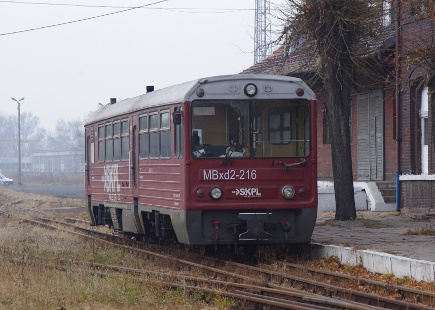
One year to go – railbus MBxd2-216 on shed at Pleszew Miasto on 1 December 2011. Photo Ed Beale.

On 7 December 2012, unnoticed and unreported, regular passenger trains on the Pleszew narrow gauge railway ceased, bringing to a close the long era of regular passenger services on the Polish narrow gauge.

The end of services was not announced on the SKPL Facebook page (now their only news outlet, since their old website closed down a couple of years ago), and only came to light as the result of a question posted on the 750mm.pl forum. The railway has not closed completely, and it is likely that occasional tourist specials will continue to run on the narrow gauge tracks, as well as regular freight on the standard gauge tracks.

The Pleszew railway, being just 4km long and dual-gauge throughout, seemed an unlikely candidate for Poland’s last regular narrow gauge passenger service, but it outlasted Smigiel by 2 years, and Krosniewice by almost 5 years.

The service survived with local authority funding, and using the staff employed by SKPL’s profitable freight business but, as we reported in September, when the local authority funding was cut last autumn and a through ticketing arrangement with Przewozy Regionalne fell through, the end of the passenger services was inevitable, and in the event it survived for only two months.

The 4km Pleszew Wask to Pleszew Miasto line is the surviving part of the Krotoszyn District Railway, which opened in 1900 and at its maximum extent ran 50km from Krotoszyn, through Dobrzyca and Pleszew, to Broniszewice.

The railway was operated by PKP until 9 June 2001, then closed for 5 years until it was reopened under the management of SKPL on 17 September 2006. As well as the station buildings at Pleszew Wask and Pleszew Miasto, and the locomotive sheds and plinthed Px48 steam locomotive at Pleszew Miasto, some remains of the rest of the railway exist, including another plinthed Px48 and train at Krotoszyn, and the station building at Dobrzyca.

Fire at Wolsztyn

Monday, 25 February 2013 by

Steam services suspended.

wolsztyn-fire

Carriage fire at Wolsztyn, 25 February 2013. Photo OSP Keblowo.

(Click to see the original photo on the TPWP website.)

At around 1am on Monday 25 February the fire brigade were called to a fire at Wolsztyn. One of the two carriages used for the regular steam service was almost completely destroyed in the blaze, though the fire brigade managed to prevent it spreading to the second coach. With no spare steam heat-capable stock Koleje Wielkopolskie were forced to cancel today’s steam service. A railbus normally used on the Leszno service was substituted.

This unfortunate event has highlighted once again how tenuous the steam hauled service at Wolsztyn is, where the loss of one coach or a single locomotive failure can lead to the suspension of the service, often for a week or more. The steam service may now be suspended for some time until Koleje Wielkopolskie can obtain a suitable replacement coach.

Three anniversaries

Tuesday, 19 February 2013 by

Vacancy – Polish Poet Laureate

Grand_Central_Terminal_Night

Grand Central Terminal in New York. Photo by Fcb981.

(Click image to expand. Click here for details of licensing.)

Three railway-connected anniversaries have featured recently in the mainstream media. The first is the centenary of Grand Central Terminal in New York which was celebrated on the BBC’s WWW News Magazine in an admirable article by Princeton University Professor of History, David Cannadine.

At the time of its construction, Grand Central was acclaimed as an engineering marvel. In the subterranean depths of Manhattan, a huge space was carved out, where trains could be boarded from platforms at two different levels, which were approached by gently sloping ramps rather than inconvenient stairs, and in terms of lighting and power, it was one of the first railroad stations to be all-electric…

…Above ground there arose a spectacular beaux arts creation, all marble and chandeliers and sculpture and glass, the centrepiece of which was a huge and lofty passenger concourse, which drew the eyes of awe-struck passengers heavenwards, where they could marvel at a vast, barrelled ceiling, painted blue and decorated with the signs of the zodiac.

I had no idea, until I read Cannadine’s piece that the preservation and restoration of Grand Central Terminal owes much to the growth of architectural conciousness which followed the public outcry after the demolition of Grand Central’s neighbour, the Pennsylvania Station in 1963.

Penn_Station

Pennsylvania Rail Road Station shortly after completion in 1911.

(Click image to see original on Wikipedia.)

Penn Station, as it became known, was was faced with pink granite and built in the classical Doric style similar to the late lamented Euston Arch. The main waiting room, inspired by the Roman Baths of Caracalla, was at 150 feet high, the largest indoor space in New York City and one of the largest public spaces in the world.

Penn interior

Penn Station concourse shortly before closure and demolition.

(Click image to see original on Wikipedia.)

The interior of Penn Station’s 1910-built steel and glass train shed uncannily resembled the interior of London’s Liverpool Street Station which was opened in 1874. Liverpool Street Station has had a radical facelift, but was saved from demolition and comprehensive redevelopment thanks to the efforts of Sir John Betjeman and the Victorian Society.

Which brings the subject round neatly to the fortieth anniversary of the broadcast of Betjeman’s Metro-Land.

Sir John, one year into his 12-year tenure as Poet Laureate, took spellbound viewers on a 48-minute trip along the line from Baker Street, in central London, to Amersham, Buckinghamshire, through the suburbs created by the Metropolitan Railway between 1910 and 1933.

He met a birdwatcher in Neasden, the carnival queens of Croxley Green and a man who had bought a Wurlitzer cinema organ and rebuilt it in his home in Chorleywood. He visited semi-detached homes with freshly-mown front lawns and cars on the driveway that demanded a ritual Sunday sponge and suds clean.

The above piece comes not, as might be expected from the BBC website, but was published by the Daily Express. The BBC, one an icon of all that was best in broadcasting, has strayed far from the path laid down for it by Lord Reith and seems to be doomed to continue its decline and fall.

And the 3rd anniversary is, of course, the 150th anniversary of the journey of the world’s first underground train. Celebrated in style by LUL and given generous coverage by all of Britain’s mainstream media. The extract below from a sympathetic blog article by Dave Hill on the Guardian’s website is typical.

Two things stood out from my steam train ride yesterday evening down the route of the first ever London underground railway journey from Paddington to Farringdon: one was the nostalgic charm of the experience, especially the smells; the other was the enthusiasm of the many spectators gathered on the platforms of the stations we chuffed past.

Perhaps we need a rail-minded Poet Laureate in Poland to set the public’s imagination alight about the country’s railway heritage and and halt its wanton destruction?

Now who can remember the last regular, steam-operated, passenger service train on the Underground?

The cull begins, 2,000 route km to go

Saturday, 16 February 2013 by

3,000 km more to follow?

Optymalizacja

PLK’s ‘Network Optimisation’ presentation.

(Click image to view or download the pdf file which includes a list of lines affected.)

On Friday, Poland’s rail infrastructure manager, PKP PLK,  announced that a total of 2,000 route kilometres was due to close by the end of the year.

According to PKP PLK, the effects of the programme – some 90 lines are due to close – will be to reduce the size of the Polish railway network from 19,200 km to 17,200 km. However, in September 2012, Rynek Kolejowy, was reporting that a ‘deal’ had been concluded within the Ministry of Transport whereby the target size of the Polish railway network would be some 14,000 – 15,000 km, necessitating a total line cull of some 5,000 km.

Perhaps, fearing a backlash from the Polish railway trade unions and the new train operating companies, PKP PLK is trying to put as much positive spin on the news as possible. (The unions are already furious that PKP’s daughter companies are trying to renege on a travel benefits package that was awarded to railway employees as part of an earlier salary and benefits package.)

PLK are talking about network ‘optimisation’ rather than closure. The lines would only be ‘suspended for a time’ rather than ‘closed’, says PLK’s vice chairman, Filip Wojciechowski, in charge of the restructuring programme. Only 910 km of route are definitively due to close, the other 1090 km will only close after the demand from train operating companies has been taking into account. There will be no further closures Wojcichowski assured at a press conference.

To those familiar with the Beeching closure programme much of the above language will be depressingly familiar. Services in the UK were only ‘suspended’, then after closure railway lines were disposed of in indecent haste as if to make sure that any subsequent reopening would be nigh on impossible.

Strategic considerations were sacrificed for short term financial goals. The Great Central Railway route from London to Manchester, constructed to European loading gauge, was closed at the same time that a detailed geological survey was being conducted prior to the connection of Britain’s railways to Europe via the Channel Tunnel! When the Beeching closures failed to make BR profitable another round of drastic closures was proposed in the early 1970s which was only averted by the most vigorous lobbying.

What is really depressing is that the supporting material released by PLK also seems to be based on the principle that PKP PLK should be ‘making a profit’. Any lines that detract from this objective should be axed. PLK’s press release cites the example of the 84 km section of line 227 between Czerwonka – Orzysz which carries only 3-4 freight trains a week and is supposed to be losing PLK over 1.5 million PLN a year.

Not only does the 1.5 million loss seem totally unrelated to anything happening on the ground – such lines enjoy zero annual maintenance and the block keepers and level crossing keepers were all laid of year’s ago – the implication that this traffic should all go by road makes no allowance for the additional road maintenance bill caused by the lorries carrying the transferred freight traffic.

It is a fact, frequently ignored by Poland’s transport planners, that the damage caused by a road vehicle moving over a road service varies as the 4th power of its axle weight. A simple calculation demonstrates that the typical HGV travelling over Poland’s roads is subsidised by ordinary motorists and taxpayers. It is a sobering thought that most of Poland’s road network would fail the ‘profitability test’ being applied by Poland’s Ministry of Transport to the country’s rail network.

Is Friday’s news the beginning of a stealth closure programme which in reality is targeting 25% or more of Poland’s railway network. Here at BTWT we very much fear that the evidence strongly suggests that in  reality this is the case.

More:

Follow

Get every new post delivered to your Inbox.

Join 105 other followers